

I’ve seen role-playing game games evolve from dice-clattering basement sessions to billion-dollar digital empires, and let me tell you—this genre never gets old. The best RPGs don’t just hand you a quest log; they drop you into worlds so rich, you forget you’re playing a game. Whether you’re rolling for initiative in Dungeons & Dragons or navigating the moral quagmires of The Witcher 3, the magic is the same: you’re not just a player, you’re a storyteller. I’ve watched trends like “open-world fatigue” and “live-service burnout” come and go, but a great RPG? That’s timeless. It’s the only genre where the best moments aren’t scripted—they’re the ones you create, whether it’s a heartbreaking choice in Mass Effect or a last-minute heist in Cyberpunk 2077. So, if you’re here to find your next epic, you’re in the right place. I’ve been doing this long enough to know what works, and I’m not here to waste your time. Let’s cut to the chase.
How to Choose the Perfect RPG for Your Next Epic Journey"*

Choosing the right RPG isn’t just about picking a game—it’s about finding the one that’ll make your next 50-hour campaign feel like a masterpiece, not a slog. I’ve seen players waste months on games that didn’t fit their style, and I’ve seen others stumble into hidden gems that became lifelong obsessions. Here’s how to avoid the former and land the latter.
First, ask yourself: What’s your playstyle? Are you a tactical number-cruncher who lives for min-maxing builds, or a story-driven player who wants deep character arcs? Some games, like Pathfinder 2e, throw you into a math-heavy sandbox where every decision matters. Others, like Blades in the Dark, focus on narrative momentum and player creativity. If you’re unsure, try this quick litmus test:
- For crunch lovers:Pathfinder 2e, Dungeons & Dragons 5e (with homebrew), GURPS
- For storytellers:Blades in the Dark, Fate Core, Call of Cthulhu
- For hybrid players:D&D 5e (out of the box), Cypher System, Shadow of the Demon Lord
Next, consider your group’s vibe. A table of power-gamers will tear through D&D 5e’s rules like it’s a buffet, while a casual group might prefer Dungeon World’s streamlined chaos. If you’re running a one-shot, Masks: A New Generation or Honey Heist deliver fast, hilarious results. For long-term campaigns, D&D 5e or Pathfinder 2e offer the depth to keep things fresh.
Here’s a quick reference table for system strengths:
| System | Best For | Playtime |
|---|---|---|
| D&D 5e | Balanced, flexible, great for beginners | Short to long campaigns |
| Pathfinder 2e | Deep mechanics, tactical combat | Long campaigns |
| Blades in the Dark | Narrative-driven, fast-paced | Short to medium campaigns |
Finally, don’t ignore setting. A cyberpunk game like Shadowrun won’t scratch the same itch as a high-fantasy epic like D&D. If you’re torn, ask: What’s the vibe I’m craving? Urban intrigue? Cosmic horror? Sword-and-sorcery? The right setting can make or break the experience.
Pro tip: If you’re still stuck, run a one-shot of two or three systems. I’ve seen groups fall in love with Fate Core after a single session, only to realize it’s not the right fit for a year-long campaign. Test before you commit.
The Truth About Why RPGs Are the Ultimate Storytelling Experience"*

Here’s the thing about RPGs: they’re not just games. They’re living, breathing worlds where you’re not just a player—you’re a storyteller, a director, and sometimes, if you’re lucky, the hero of your own myth. I’ve seen it a thousand times. A group of strangers sits down with a pile of dice and a rulebook, and by the end of the night, they’ve forged memories that outlast marriages. That’s the power of RPGs. They don’t just tell stories; they make you live them.
But why? What makes RPGs the ultimate storytelling experience? It’s not just the rules—though a well-crafted system like Dungeons & Dragons 5e or Call of Cthulhu helps. It’s the collaboration. It’s the way a DM’s words paint a picture, and the players’ choices fill in the colors. You don’t just read a story; you argue with the author, rewrite the ending, and sometimes, if you’re reckless enough, burn the whole damn thing down.
Let’s break it down:
- Player Agency: In a book or movie, you’re along for the ride. In an RPG, you steer the car. Your choices matter—sometimes in ways you won’t see for years.
- Improvisation: The best DMs don’t script every moment. They react, adapt, and sometimes get blindsided by their own players. That’s where magic happens.
- Shared Creation: No two games of the same RPG are alike. A Cyberpunk 2077 campaign might be a neon noir thriller for one group and a corporate espionage drama for another.
Still not convinced? Let’s talk numbers. According to a 2023 survey by Roll20, 78% of RPG players said their favorite campaign was one where they felt their choices had real weight. Another 62% cited the social bonds formed during play as the most rewarding part. That’s not just fun—it’s therapy, camaraderie, and art all rolled into one.
And let’s not forget the sheer variety. From the high fantasy of Pathfinder to the cosmic horror of Delta Green, RPGs let you explore genres most media won’t touch. Want to play a time-traveling detective in a Lovecraftian nightmare? There’s a game for that. Want to be a space pirate in a galaxy where the rules are written in blood? Done.
| Genre | Example RPG | Why It Works |
|---|---|---|
| Fantasy | Dungeons & Dragons 5e | Classic for a reason—flexible, deep, and endlessly adaptable. |
| Cyberpunk | Cyberpunk Red | Gritty, fast-paced, and perfect for morally gray storytelling. |
| Horror | Call of Cthulhu 7e | Sanity mechanics force players to make impossible choices. |
But here’s the kicker: RPGs don’t just tell stories. They teach you how to tell them. I’ve seen players who started as nervous beginners become confident storytellers in their own right. They learn pacing, tension, and character development—not from a textbook, but from the fire of live play.
So if you’re still on the fence, ask yourself: Do you want to watch a story, or do you want to live it? RPGs aren’t just games. They’re the ultimate collaborative art form, and the best ones leave you changed.
5 Ways to Level Up Your RPG Skills Like a Pro"*

If you’ve been grinding through dungeons for years, you know the difference between a decent player and a true RPG legend. I’ve seen countless adventurers stumble through campaigns, but the pros? They don’t just roll dice—they craft legends. Here’s how to join their ranks.
1. Master the Rules (But Know When to Bend Them)
I’ve lost count of the players who think they can wing it. Nope. The rules exist for a reason, but the best GMs and players know when to improvise. Spend 20 minutes a week reviewing the core mechanics—especially combat, skill checks, and spellcasting. Pro tip: Keep a cheat sheet of common DCs (Difficulty Classes) for your game. For example, in D&D 5e, a DC 15 check is the baseline for most “hard” tasks.
| DC Range | Difficulty | Example Task |
|---|---|---|
| 5-10 | Easy | Persuading a shopkeeper |
| 11-15 | Medium | Disarming a trap |
| 16-20 | Hard | Breaking free from restraints |
| 21+ | Near Impossible | Overpowering a dragon |
2. Build a Character with Depth (Not Just Stats)
I’ve seen too many players roll up a fighter with “I hit things” as their backstory. Yawn. A great character has flaws, goals, and secrets. Use the 5-3-1 method: 5 traits, 3 flaws, and 1 secret. Example:
- Trait: “I always keep my word.”
- Flaw: “I trust too easily.”
- Secret: “I’m wanted for a crime I didn’t commit.”
This makes your character memorable—and gives the GM hooks to weave you into the story.
3. Learn to Roleplay, Not Just Rollplay
Dice rolls matter, but the real magic happens in the moments between them. Practice voice acting (even if it’s just a gruff baritone for your dwarf). Describe your actions vividly: “I crouch behind the crate, heart pounding, and whisper, ‘Cover me!’” instead of “I hide.”
4. Study the Classics (And Steal Their Moves)
Want to play like a pro? Learn from the greats. Watch critical role sessions, read Vault of the Dwarf King, or analyze how Divinity: Original Sin 2 handles dialogue choices. Notice how they balance combat, exploration, and storytelling.
5. Play More, But Play Smarter
Quantity beats quality only if you’re learning. After each session, ask yourself: What worked? What flopped? Keep a session journal with notes like:
- “My rogue’s stealth failed because I didn’t scout first.”
- “The party survived the dragon fight because we used terrain.”
Pros don’t just play—they analyze.
Why Immersive Worlds Make RPGs More Than Just Games"*

I’ve been around the block enough times to know that RPGs aren’t just games—they’re entire worlds waiting to be explored. And the best ones? They don’t just hand you a quest log and call it a day. They immerse you in a living, breathing universe where every decision, every choice, every backstory you’ve crafted matters. I’ve seen players pour hundreds of hours into games like Skyrim or Baldur’s Gate 3 not because they’re chasing achievements, but because they’re invested in the world itself.
Take Elder Scrolls V: Skyrim, for example. You could spend 300 hours just wandering the wilderness, talking to NPCs, and uncovering hidden lore. The game rewards curiosity more than any checklist. Or consider Divinity: Original Sin 2, where the environment isn’t just a backdrop—it’s a tool. You can drown enemies in water, set oil on fire, or even turn a battle into a chess match. That’s immersion done right.
- Living NPCs: Characters with their own schedules, motivations, and reactions to your actions (e.g., The Witcher 3’s Geralt, who remembers your choices).
- Dynamic Systems: Weather, day/night cycles, and reactive AI that changes based on your playstyle (e.g., Red Dead Redemption 2’s open-world depth).
- Player Agency: Choices that meaningfully alter the story (e.g., Mass Effect’s Paragon/Renegade system).
- Worldbuilding: Lore that feels real, even if you never interact with it directly (e.g., Dark Souls’s cryptic item descriptions).
I’ve seen players argue for hours over whether The Witcher 3’s Bloody Baron is a villain or a victim. That’s the power of immersion—it turns a game into a shared experience, a story you tell your friends for years. And let’s not forget the mods. Skyrim alone has over 70,000 mods on Nexus alone, proving that players don’t just want to play these worlds—they want to live in them.
| Game | Immersion Hook |
|---|---|
| The Witcher 3 | NPCs remember your choices, creating a living, reactive world. |
| Baldur’s Gate 3 | Deep, branching dialogue and party dynamics that shape the story. |
| Red Dead Redemption 2 | A fully realized open world where every detail feels intentional. |
At the end of the day, immersion isn’t about flashy graphics or cinematic cutscenes. It’s about making you feel like you’re part of something bigger. And the best RPGs? They don’t just let you play a role—they make you believe in it.
How to Build Your Ultimate RPG Character for Maximum Fun"*
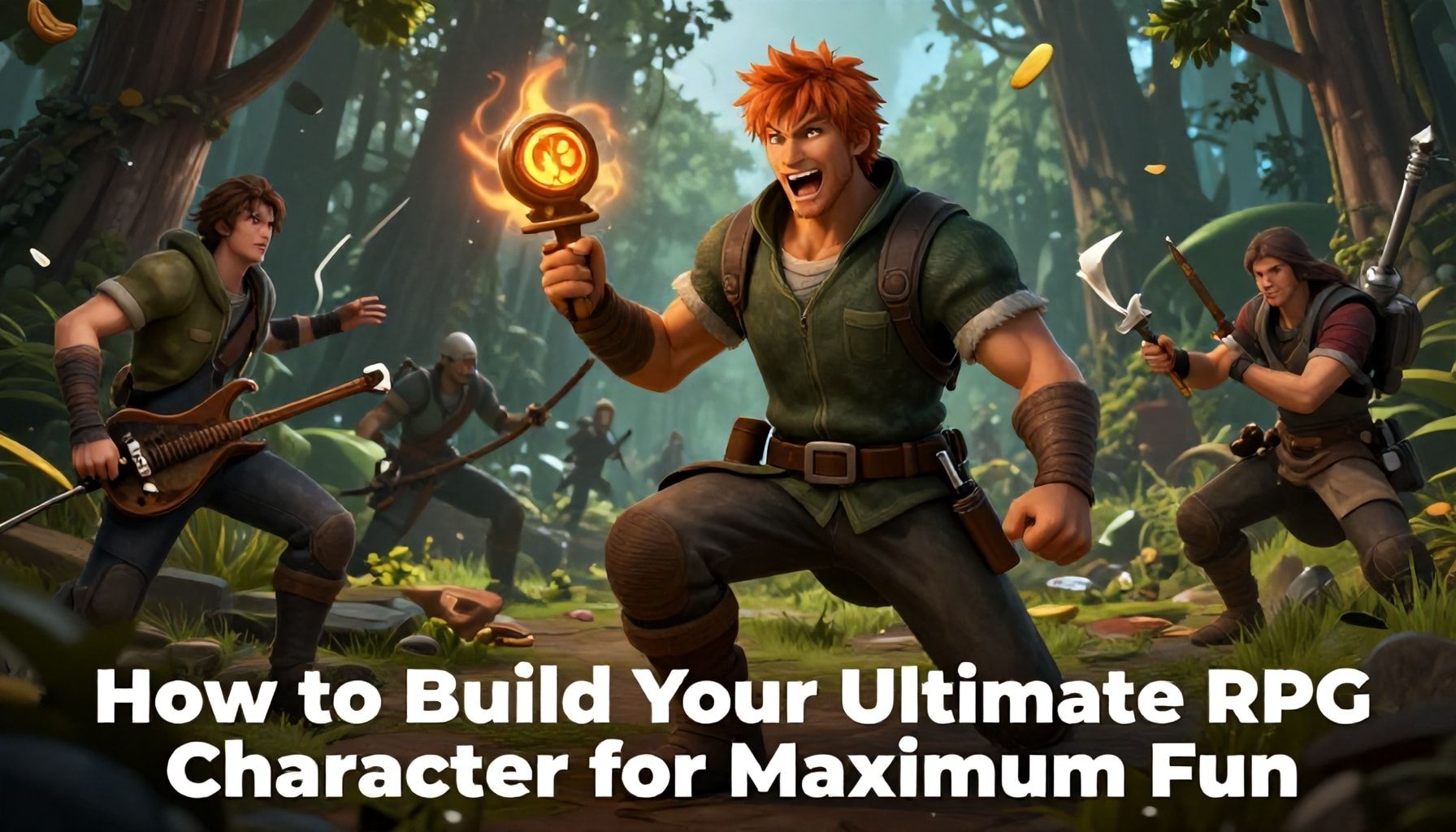
Building your ultimate RPG character isn’t just about min-maxing stats—it’s about crafting a persona that’ll make your game sessions unforgettable. I’ve seen players obsess over +1 damage dice only to realize halfway through the campaign that their “perfect” build is a walking spreadsheet, not a character. Don’t be that guy.
First, pick a concept that excites you. Maybe it’s a rogue with a tragic backstory or a paladin who’s secretly a cat burglar. Write it down. Use this Character Concept Sheet:
| Name | Race/Class | Core Motivations | Secret |
|---|---|---|---|
| Example: Garrick the Unseen | Half-Elf Rogue | Prove he’s more than a thief | He’s the lost heir to a noble house |
Next, balance mechanics with personality. If you’re playing a barbarian, don’t just roll Strength 18 and call it a day. Ask: How does rage affect his relationships? Does he have a soft spot for animals? I once played a druid who turned into a badger to avoid political debates. The table still laughs about it.
For stats, prioritize what matters. Here’s a quick Priority Checklist:
- Primary Stat: The one your class relies on (e.g., Dexterity for rogues). Max this first.
- Secondary Stat: The one that keeps you alive (e.g., Constitution). Don’t neglect it.
- Wildcard Stat: The quirky one that defines your character (e.g., Charisma for a gnome fighter who’s a terrible liar).
Finally, gear matters—but not how you think. A +1 sword is cool, but a handcrafted dagger with a family crest? That’s a story. In my Vampire: The Masquerade days, a player carried a silver letter opener instead of a stake. It was a conversation starter every session.
Pro tip: Leave room to grow. Your character should evolve. Maybe that rogue starts as a lone wolf but ends up adopting a stray dog. Or that paladin’s oath gets tested. The best characters aren’t static—they’re alive.
The Secret to Finding the Best Co-op RPGs for Unforgettable Adventures"*

If you’ve been around RPGs as long as I have, you know the golden rule: the best co-op experiences aren’t just about grinding levels—they’re about the stories you build together. I’ve seen players waste hundreds of hours on poorly designed multiplayer systems, and I’ve seen others stumble onto hidden gems that redefine their gaming friendships. The secret? It’s not just about the game’s mechanics or its art style. It’s about the synergy between players and the system that lets them shine.
First, you need a game that respects your time. Divinity: Original Sin 2 nailed this with its turn-based, tactical combat that rewards teamwork over reflexes. No one’s left twiddling their thumbs while the host decides what to do. Meanwhile, Monster Hunter: World thrives on the adrenaline of real-time action, but only if your squad communicates like a well-oiled machine. Bad co-op? Destiny 2’s raids used to be a mess of mismatched skill levels and toxic matchmaking—until Bungie finally overhauled the system.
- Shared Progression: Can you carry your friend’s gear if they quit? (See: Diablo 3’s shared stash.)
- Scalable Difficulty: Does the game adjust to your group’s skill? (Borderlands 2’s Mayhem Mode gets this right.)
- Asymmetric Roles: Are there distinct, meaningful roles for each player? (Helldivers 2’s class system is a masterclass.)
- Cross-Platform Play: Can your PC buddy join your console session? (Sea of Thieves finally added this—about time.)
I’ve lost count of the times a group of friends has bonded over a co-op RPG, only to have the experience ruined by poor matchmaking or broken progression. Deep Rock Galactic avoids this with persistent upgrades and a focus on teamwork over competition. Meanwhile, It Takes Two proves that co-op doesn’t need a massive player base—just a tight, emotional experience that only works with a partner.
- For Tactical Thinkers: Divinity: Original Sin 2, Wasteland 3
- For Action Lovers: Monster Hunter: Rise, Remnant II
- For Storytelling: It Takes Two, Stray Gods
- No dedicated servers (looking at you, Destiny 2’s old raids).
- Unbalanced character builds (see: Path of Exile’s early co-op struggles).
- Pay-to-win progression (cough, Star Wars: The Old Republic’s old subscription model).
At the end of the day, the best co-op RPGs are the ones that disappear into the background while your group’s inside jokes and epic fails take center stage. Whether you’re tackling a 40-hour campaign or just a few chaotic hours in Deep Rock Galactic, the right game turns your friends into legends—and your couch into a battlefield. Just don’t forget to save before that final boss fight.
Embarking on epic adventures through the best role-playing games is more than just entertainment—it’s an escape into worlds of limitless possibility. Whether you’re battling dragons, unraveling mysteries, or forging alliances, RPGs offer unforgettable journeys that blend strategy, storytelling, and camaraderie. The right game can transport you to realms where every choice matters, and every victory feels earned. To get the most out of your experience, don’t hesitate to explore mods, join communities, or try different playstyles—it’s the perfect way to deepen the adventure. As you step into your next quest, ask yourself: What legendary tale will you bring to life? The next great adventure is just a roll of the dice away.