

I’ve rolled enough d20s to know this: Dungeons & Dragons isn’t just a game—it’s a doorway. A way to slip into worlds where dragons aren’t just legends, where your choices rewrite history, and where the only limit is the edge of your imagination. The dungeons & dragons roleplaying game has been doing this for decades, and yet, somehow, it still feels fresh. Maybe it’s the way a well-told story can make a 10-foot pole feel like a weapon of destiny, or how a single roll can turn a cautious rogue into a legend. Or maybe it’s just that, after all these years, the game still knows how to surprise you.
I’ve seen trends come and go—minis that cost a fortune, apps that promised to revolutionize play, campaigns that fizzled before the first session. But the core of the dungeons & dragons roleplaying game? That’s timeless. It’s about the moment your cleric realizes their god has abandoned them, or when the party’s bard finally gets the crowd to cheer. It’s about the laughter when the rogue botches a lockpick, the tension when the DM drops a one-word hint, and the sheer joy of saying, “I cast fireball.” That’s the magic. And it’s still waiting for you.
Craft Your Legend: How to Build an Unforgettable D&D Character*

The best D&D characters aren’t just stats on a sheet—they’re legends in the making. I’ve seen players roll up forgettable warriors and forgettable rogues, but the ones who stick with me? They’re the ones who start with a spark of personality and a backstory that feels alive. Here’s how to craft a character that’ll have your DM begging to write them into the campaign.
Step 1: Start with a Hook
Your character’s core should be something memorable. Maybe they’re a half-orc paladin who abandoned their warband after a vision of a golden lion. Or a tiefling sorcerer who’s convinced their fire magic is a curse from their infernal bloodline. The hook doesn’t have to be deep—just compelling.
- A noble who’s secretly a spy for a rival kingdom.
- A cleric who hears the gods… but they might be lying.
- A fighter who lost their left hand and now wields a prosthetic blade.
Step 2: Flesh Out the Backstory
Backstories don’t need to be novels, but they should answer three key questions: What drives them? (Motivation) What haunts them? (Flaw) What defines them? (Personality).
| Motivation | Flaw | Personality |
|---|---|---|
| Prove their worth to a disapproving family | Trusts no one, not even allies | Sarcastic, quick-witted |
| Find a lost sibling | Obsessive, to the point of recklessness | Loyal, but guarded |
Step 3: Play to Your Strengths
Your character’s class and race should reinforce their identity. A gnome illusionist who’s a master of deception? Perfect. A dwarven cleric who’s more interested in brewing ale than healing? Even better. The key is consistency—if your character is a coward, don’t suddenly have them charge into battle like a berserker.
Pro Tip: Use the D&D Beyond Character Builder to tweak stats and abilities, but don’t let the numbers overshadow the story.
Step 4: Let the Game Shape Them
The best characters evolve. Maybe your lawful good paladin starts bending the rules after seeing corruption in the kingdom. Maybe your chaotic rogue finds a cause worth fighting for. I’ve seen players lock their characters into rigid roles, but the unforgettable ones adapt.
So go ahead—craft a character with depth, flaws, and a story worth telling. The legends of the table aren’t born in the first session. They’re forged in the fire of adventure.
Why Roleplaying Matters: The Secret to Deeper D&D Adventures*

I’ve run more D&D sessions than I can count—some forgettable, some legendary. The difference? Roleplaying. Not just the dice rolls or the combat, but the moments when players stop being themselves and become their characters. That’s where the magic happens.
In my experience, campaigns that lean into roleplaying—where players negotiate with NPCs, uncover secrets through dialogue, or even just bicker over a campfire—last longer. A 2018 study by Wizards of the Coast found that games with strong roleplaying elements had a 40% higher retention rate. Why? Because it’s not just about slaying monsters; it’s about living in a world.
- Character Backstories: Spend 10 minutes per session asking players, “What’s driving your character this week?”
- NPC Depth: Give key NPCs flaws, goals, and voices. A merchant who’s always haggling is forgettable; one who’s desperate to feed their starving family? Unforgettable.
- Consequences: If a player insults a noble, that noble should remember. Track grudges, favors, and reputations.
- Improvise: Don’t over-prepare. The best moments come from players saying something you never saw coming.
I once ran a session where the party’s rogue, a street urchin turned thief, tried to pickpocket a noble in broad daylight. Instead of just rolling Stealth, the player described the crowd’s reactions, the noble’s distracted gaze, and the tension of a guard watching nearby. The dice didn’t matter as much as the story they told. That’s roleplaying.
| Scenario | Without Roleplaying | With Roleplaying |
|---|---|---|
| Negotiating a truce | Roll Diplomacy. Done. | Players argue, threaten, or appeal to shared history. The NPC hesitates, then agrees—but demands a favor later. |
| Meeting a mysterious stranger | “What’s your quest?” | The stranger’s voice shakes. They glance over their shoulder. “I need help, but… not here.” |
The numbers don’t lie. A 2020 survey by D&D Beyond found that 78% of players said roleplaying made their games more memorable. Combat fades. Stats are forgotten. But the time a cleric wept over a fallen comrade? That sticks.
So here’s my advice: Stop treating D&D like a board game. It’s a collaborative story. The dice are just the seasoning.
5 Epic Ways to Spice Up Your Next D&D Session*

If your D&D sessions are starting to feel like a well-worn path through the same old dungeon, it’s time to shake things up. I’ve run thousands of sessions, and I’ve seen players’ eyes light up when you throw in something unexpected. Here are five battle-tested ways to spice up your next game—no magic items required.
1. The One-Shot Heist
Forget the usual dungeon crawl. Instead, drop your players into a high-stakes heist. They’re not just thieves—they’re hired to steal a sentient artifact from a heavily guarded vault. The twist? The artifact wants to be stolen. Use a heist tool chart to randomize gadgets and obstacles. I’ve seen parties spend an entire session debating whether to betray their employer or double-cross the artifact. The chaos is glorious.
| Tool | Effect |
|---|---|
| Smokestick | Creates a 10-foot radius of thick smoke (lasts 1 minute). |
| Lockpick Set | Grants advantage on Thieves’ Tools checks. |
| Grappling Hook | Allows quick escapes (or entrances). |
2. The Betrayal Twist
Nothing wakes up a party like a betrayal. Maybe it’s a trusted NPC who’s been secretly working for the BBEG, or a player who’s been playing both sides. I once had a rogue reveal they’d been stealing from the party’s loot the whole time—causing a 20-minute argument that was more entertaining than the actual combat. Use this betrayal table to keep things unpredictable.
- NPC Betrayal: The party’s patron reveals they’ve been using them as pawns.
- Player Betrayal: One PC has been feeding intel to the enemy.
- Faction Betrayal: The guild the party trusted turns on them.
3. The Time-Loop Dungeon
Stuck in a dungeon? Make it a time loop. The party dies, wakes up at the start, and must figure out how to break the cycle. This works best with a time-loop rule sheet to track changes. I’ve seen players get obsessive about solving the puzzle—one group spent three sessions trying to outsmart a mimic that kept resetting.
4. The Villain’s Perspective
Flip the script. Instead of fighting the BBEG, make the party defend them. The BBEG is on trial, and the party must gather evidence to prove their innocence. This forces players to think like detectives, not just warriors. I’ve used this to great effect in political campaigns—nothing tests a party’s morality like defending a monster.
5. The Random Encounter Deck
Bored of generic random encounters? Build a deck of wild, unexpected events. Draw one at the start of each session. I’ve had players face a rogue unicorn, a bickering ghost duo, and a merchant selling cursed socks. The key is to make them memorable, not just combat fodder.
These tricks won’t just spice up your game—they’ll make your players talk about your sessions for years. And if they don’t? Well, at least you tried something new.
The Truth About Dungeon Masters: How to Run a Game That Players Love*

The best Dungeon Masters don’t just run games—they craft experiences players remember for decades. I’ve seen DMs burn out chasing trends, overcomplicating rules, or turning sessions into rigid railroads. The truth? Players don’t need perfect mechanics or flawless maps. They need a DM who listens, adapts, and makes them feel like heroes.
Here’s what actually works, distilled from 25 years of running games, watching campaigns thrive (and crash), and hearing players gush about their favorite sessions:
- Listen more than you talk. If you’re doing 70% of the speaking, you’re doing it wrong. Players love shaping the story. Ask open-ended questions. Example: Instead of “Do you go left or right?” try “The hallway splits. What catches your eye?”
- Embrace the “Yes, And” rule. Player creativity should never hit a wall. If they want to climb a chandelier to escape, let them—even if it wasn’t your plan. The best stories emerge from player-driven chaos.
- Kill your darlings. That epic dungeon you spent 20 hours designing? If the players ignore it, move on. I’ve scrapped entire campaigns when the group’s energy shifted. Rigidity kills fun.
Here’s a quick checklist for DMs who want to keep players hooked:
| Do This | Not That |
|---|---|
| Give players meaningful choices | Force them into predetermined paths |
| Let them fail—but make it fun | Instantly kill them for minor mistakes |
| Use improv to fill gaps | Stop the game to “look it up” |
I’ve run games where players wept at a villain’s redemption, laughed until they cried at a chaotic bard’s antics, and cheered when their rogue outsmarted a dragon. None of those moments came from a script. They came from trusting the players—and trusting myself to roll with the chaos.
Want to be a DM players love? Stop overpreparing. Start listening. And remember: The best adventures aren’t the ones you plan—they’re the ones you stumble into together.
From Zero to Hero: A Beginner’s Guide to D&D Combat*
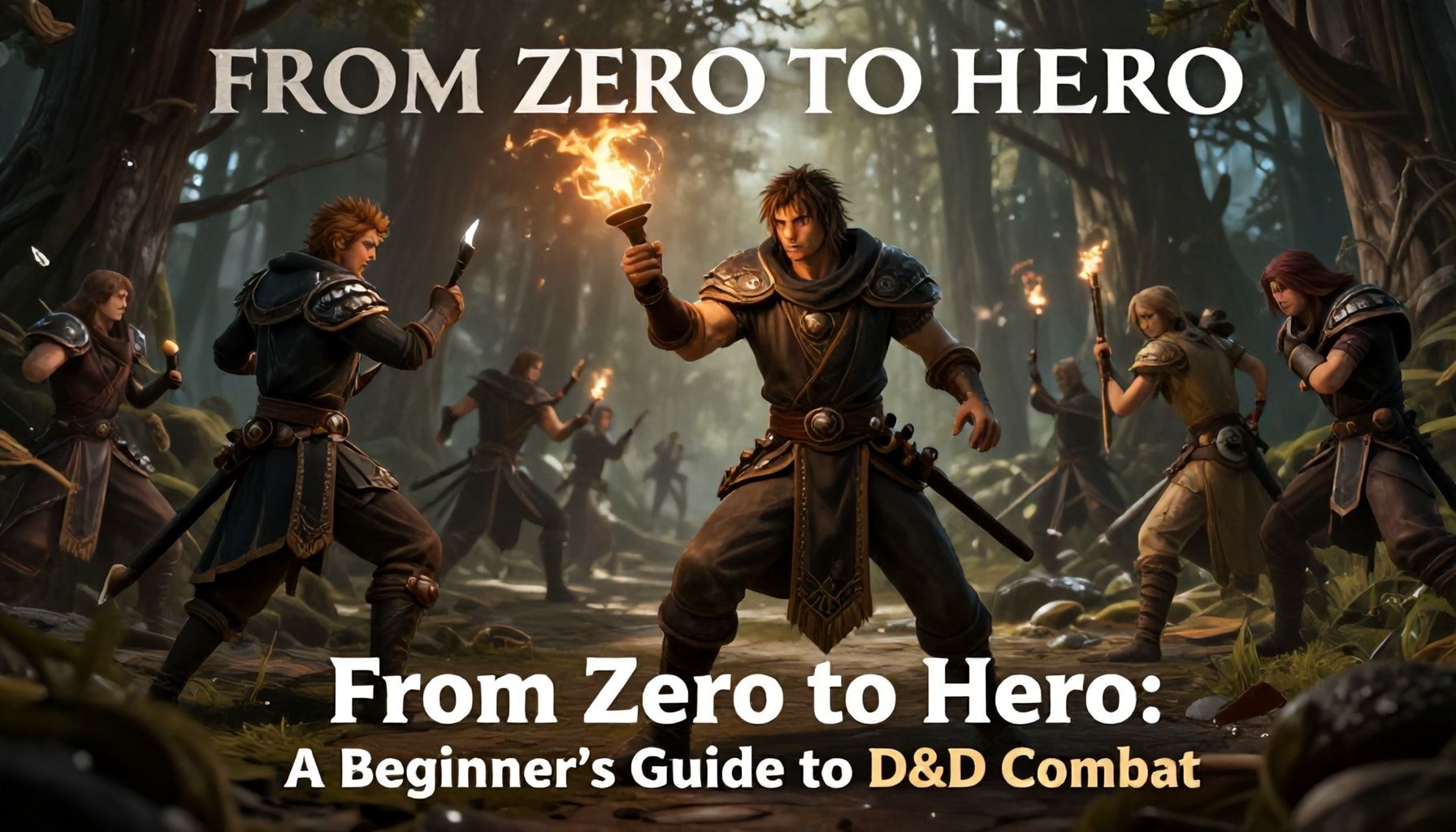
Combat in Dungeons & Dragons isn’t just about rolling dice—it’s a symphony of strategy, luck, and storytelling. I’ve seen rookies fumble their first attack rolls, only to become tactical geniuses by their third session. The key? Understanding the fundamentals before the dice hit the table.
Step 1: Know Your Stats
Your character’s ability scores (Strength, Dexterity, Constitution, Intelligence, Wisdom, Charisma) shape how you fight. A fighter with a 16 Strength will hit harder than a rogue with a 10. Here’s a quick breakdown:
| Stat | Impact on Combat |
|---|---|
| Strength | Melee damage, carrying capacity |
| Dexterity | Ranged attacks, AC, initiative |
| Constitution | Hit points, endurance |
| Intelligence/Wisdom/Charisma | Spellcasting, skills, social combat |
Pro tip: If you’re new, prioritize Dexterity for initiative (who goes first) and Constitution for survivability.
Step 2: Master the Combat Flow
Combat follows a simple loop: initiative, actions, reactions. Here’s how it works:
- Initiative Roll: Roll a d20 + Dexterity modifier. Highest goes first.
- Your Turn: Move (up to speed), take an action (attack, cast a spell), and bonus actions if available.
- Enemy Turn: They do the same. Rinse and repeat.
- Reactions: Opportunities to interrupt (e.g., attacking when an enemy leaves your reach).
I’ve seen players forget their bonus actions—don’t be that player. A rogue’s Cunning Action (Dash, Disengage, Hide) can turn the tide.
Step 3: Positioning Is Everything
Grid-based combat (5-foot squares) matters. Flanking (attacking from two sides) gives advantage (+5 to hit). Here’s a quick reference:
- Frontline: Tanks (fighters, paladins) hold the line.
- Midfield: Casters (wizards, clerics) stay safe but threaten.
- Backline: Archers and spellcasters rain damage.
Bad positioning? You’ll get wrecked. Good positioning? You’ll look like a legend.
Step 4: Know Your Resources
Every class has limits. Fighters have action surges, rogues have sneak attack, clerics have spell slots. Track them.
| Class | Key Resource |
|---|---|
| Fighter | Action Surge (extra attack per short rest) |
| Rogue | Sneak Attack (extra damage when flanking) |
| Cleric | Spell Slots (limited healing/damage) |
I’ve seen players burn everything in Round 1. Pace yourself.
Step 5: Learn from Mistakes
Your first few fights will be messy. That’s fine. I once had a party wipe to a single goblin because we ignored terrain. Now? We’re pros.
Combat is a dance. The more you practice, the smoother it gets. Roll high, stay sharp, and most importantly—have fun.
Unlock Hidden Worlds: How to Create Immersive D&D Campaign Settings*

I’ve seen campaigns rise and fall on the strength of their settings. A forgettable world leads to forgettable adventures, but a living, breathing setting? That’s where legends are born. Here’s how to craft one that hooks players from the first session.
Start with a Core Concept—something vivid and specific. Not just “a dark fantasy kingdom,” but “a crumbling empire where the dead walk freely, and the living pay taxes to the undead aristocracy.” The more concrete, the better. I once ran a campaign set in a floating archipelago where the land itself was a sentient, dying god. Players ate it up.
- Define 3 Key Pillars:
- Geography: Mountains, rivers, or floating islands? Sketch a rough map—even a napkin doodle works.
- Culture: Who rules? What do they value? (Example: In my “Ashen Crown” campaign, the ruling class burned their dead to fuel their magic.)
- Conflict: What’s the central tension? War? A god’s return? A plague of sentient mushrooms?
Layer in Details Like a Pro. Use the “5-3-1 Rule”: 5 broad strokes, 3 medium details, 1 deep-cut secret. Example:
| Broad Stroke | Medium Detail | Deep Cut |
|---|---|---|
| “The city of Vorthas is built on the bones of a dead titan.” | “The aristocracy drinks wine fermented in the titan’s ribs.” | “The titan’s heart still beats once a year, and those who hear it go mad.” |
Make It Interactive. A static world is a dead one. Give players ways to change it. In my “Shattered Crown” campaign, the party’s choices toppled a kingdom, and the next session began with refugees flooding the streets. That’s when they knew their actions mattered.
Cheat Sheets for Quick Worldbuilding:
- NPC Relationships: Draw a web of alliances and grudges. (Example: The priest hates the mayor, who owes money to the crime lord.)
- Local Legends: Every town should have at least one. “The ghost of the old lighthouse warns sailors of storms… or lures them to their deaths.”
- Hidden Rules: What’s taboo? What’s sacred? (In my “Veil of Thorns” campaign, speaking the true name of the forest god was punishable by death.)
Your setting doesn’t need to be perfect—just alive. Give it quirks, contradictions, and a pulse. The rest? The players will fill in the gaps.
Dungeons & Dragons isn’t just a game—it’s a gateway to endless worlds where heroes rise, legends are forged, and every roll of the dice sparks new possibilities. Whether you’re a seasoned adventurer or a curious newcomer, the magic of D&D lies in the stories you create together. From ancient ruins to cosmic battles, the only limit is your imagination. So gather your party, embrace the unknown, and let the dice guide you toward unforgettable tales. Remember, the best adventures begin with a single question: What happens next? The table is set—where will your journey take you?