
Look, I’ve been covering these games since Arkham Asylum first dropped, and let me tell you—getting the Arkham games in order wrong is like walking into a Joker trap blindfolded. You’ll miss the payoff, the character arcs, and the sheer brilliance of Rocksteady’s storytelling. Sure, you could jump straight into Arkham Knight if you’re feeling reckless, but you’ll be lost before you hit the Batmobile. The Arkham games in order matter because this isn’t just a series—it’s a dark, interconnected saga that rewards patience.
I’ve seen fans stumble through the wrong order, and it’s painful. You don’t just play these games; you experience them. The tension, the detective work, the way each title builds on the last—it’s all part of the ride. And yeah, I know the Arkham Origins debate is still a thing, but let’s be real: if you’re serious about mastering the Arkhamverse, you’ve got to play them right. No shortcuts, no half-measures. Just pure, unfiltered Gotham madness.
The Definitive Arkham Play Order: Why Sequence Matters for the Best Experience*
The Arkham series is a masterclass in comic-book storytelling, but playing them out of order is like reading a Batman comic starting with No Man’s Land before Year One. I’ve seen players stumble into Arkham Origins first, only to be baffled by its rough edges and lack of context. The series isn’t just a collection of games—it’s a carefully crafted arc, and sequence matters.
Here’s the definitive play order, ranked by narrative cohesion and gameplay evolution:
- 1. Batman: Arkham Asylum (2009) – The blueprint. Rocksteady’s debut is a near-perfect blend of detective work, combat, and psychological horror. Play this first; it sets the tone.
- 2. Batman: Arkham City (2011) – The magnum opus. Bigger, bolder, and packed with iconic villains. The combat system peaks here.
- 3. Batman: Arkham Knight (2015) – The divisive finale. The Batmobile’s a mixed bag, but the story ties up loose ends.
- 4. Batman: Arkham Origins (2013) – The black sheep. Play it last. It’s rough around the edges, but its prequel status makes it feel like a rough draft.
Why This Order Works:
| Game | Key Story Beats | Gameplay Impact |
|---|---|---|
| Arkham Asylum | Joker’s descent, Scarecrow’s fear toxin | Introduces free-flow combat |
| Arkham City | Hugo Strange’s machinations, Ra’s al Ghul’s return | Refines combat, adds gadgets |
| Arkham Knight | Scarecrow’s final gambit, Batman’s legacy | Open-world chaos, Batmobile |
| Arkham Origins | Young Batman, Joker’s origin | Clunkier combat, but fun DLC |
If you’re short on time, skip Origins entirely. But if you’re a completionist, save it for last—it’s the series’ rough draft, and it shows. I’ve seen players get frustrated by its technical issues, but it’s easier to stomach when you’ve already experienced the series at its best.
Pro Tip: Play the DLC for Arkham City and Knight—they’re some of the best Batman stories ever told. Harley’s Revenge and A Matter of Family are must-plays.
How to Play the Arkham Games in Perfect Chronological Order*
Look, I’ve been covering these games since Arkham Asylum blew everyone’s minds back in 2009. Over the years, I’ve seen fans argue over the “right” way to play them—release order, chronological order, even some wild fan theories about hidden timelines. But if you want the cleanest, most immersive experience? Play them in perfect chronological order. Here’s how.
First, let’s get the basics out of the way. The Arkham series is a tight, self-contained universe, but the games don’t follow release order. Arkham Origins is a prequel, Asylum is the first in the main timeline, and Knight wraps it up. Simple, right? Not quite. There’s a bit more nuance.
- Batman: Arkham Origins (2013) – Young Batman, pre-Robin, pre-Joker’s full descent.
- Batman: Arkham Asylum (2009) – The Joker’s masterpiece, Two-Face’s breakdown.
- Batman: Arkham City (2011) – Gotham’s collapse, Hugo Strange’s experiments.
- Batman: Arkham Knight – The Scarecrow’s endgame, Gotham’s final reckoning.
Now, here’s where it gets tricky. Origins is a prequel, but it’s not a perfect fit. The art style’s rougher, the combat’s clunkier, and the story’s a bit messy. Still, it’s essential for understanding Batman’s early years. I’d recommend playing it first, but if you’re short on time, you can skip it—just know you’ll miss some lore.
Next, Asylum and City are where the series hits its stride. Asylum is a masterclass in tension, with the Joker’s chaos unfolding in real-time. City expands the world, throwing in Catwoman, the Riddler, and a city-wide conspiracy. Play them back-to-back for maximum impact.
- If you’re playing Asylum for the first time, don’t rush. The asylum’s layout is a puzzle in itself.
- In City, the Riddler’s challenges are optional, but they add depth. Don’t skip them.
- Knight’s Batmobile sections are divisive. If you hate them, you’re not alone.
Finally, Arkham Knight ties everything together. It’s the most divisive entry—some love its scale, others hate its pacing. But chronologically, it’s the end. The story wraps up Scarecrow’s arc, Batman’s legacy, and Gotham’s fate. It’s messy, but it’s the finale.
So there you have it. Play them in order, take your time, and don’t skip Origins if you can help it. Trust me, the payoff’s worth it.
The Truth About the Arkham Games’ Hidden Story Connections*

If you think the Arkham games are just a string of Batman’s greatest hits, you’re missing the point. The series is a masterclass in hidden storytelling, weaving a dense, interconnected narrative that rewards players who pay attention. I’ve seen fans obsess over every cutscene, every environmental detail, and every cryptic line of dialogue—because the Arkhamverse is a puzzle, and the pieces don’t just fit together; they click.
Take Arkham Asylum (2009). On the surface, it’s a straightforward descent into madness. But dig deeper, and you’ll find seeds planted for Arkham City’s Hugo Strange experiments, the Joker’s twisted origin, and even the Riddler’s obsession with the Arkhamverse’s true architect: Rocksteady. The game’s ending? A direct setup for Arkham City, where Strange’s mind-control tech becomes the backbone of the plot. Miss it, and you’ll be lost when the Joker’s army starts marching in the sequel.
Key Hidden Connections:
- Arkham Asylum’s “Protocol 10” is referenced in Arkham City as the Joker’s playbook for chaos.
- The Joker’s “laughing gas” in Asylum evolves into the Titan formula in Arkham Origins.
- Harley Quinn’s first appearance in Asylum foreshadows her pivotal role in Arkham Knight.
Then there’s Arkham Origins, the black sheep of the series. Critics dismissed it, but it’s the only game that explains Black Mask’s rise, the Court of Owls’ origins, and why Batman’s backstory matters. Skip it, and Arkham Knight’s ending—with its time-jumping, multiverse-bending finale—won’t land as hard.
Timeline Cheat Sheet:
| Game | Key Story Threads |
|---|---|
| Arkham Origins | Court of Owls, Black Mask, Joker’s first encounter with Batman |
| Arkham Asylum | Joker’s transformation, Hugo Strange’s experiments |
| Arkham City | Titan formula, Strange’s mind control, Arkhamverse’s expansion |
| Arkham Knight | Scarecrow’s final plan, multiverse collapse |
Here’s the kicker: The Arkhamverse isn’t just about Batman. It’s about the city itself. Gotham’s corruption, its villains, and its heroes are all part of a cycle. The games don’t just tell a story—they build one. And if you play them in the wrong order? You’re missing the whole damn point.
5 Ways to Optimize Your Arkham Playthrough for Maximum Enjoyment*
If you’ve played the Arkham games more than twice, you know the formula: stealth takedowns, detective mode, and a healthy dose of Batman’s one-liners. But here’s the thing—even the best players miss tricks. I’ve seen folks grind through Arkham Knight’s Riddler challenges only to realize they could’ve saved hours with a few simple tweaks. So, let’s cut the fluff and get to the good stuff.
1. Master the Detective Mode Early
Detective Mode isn’t just for spotting clues—it’s your secret weapon. In Arkham Asylum, I’ve seen players waste time fumbling with gadgets when a quick scan could’ve highlighted every enemy and objective. Train your eye to spot patterns: red dots for enemies, blue for clues, and yellow for interactables. Pro tip? In Arkham Knight, the Batmobile’s scan function works the same way—use it to spot Riddler trophies from a distance.
| Game | Detective Mode Tips |
|---|---|
| Arkham Asylum | Hold R2 (PS4) or RT (Xbox) to lock onto enemies mid-combat. |
| Arkham Knight | Use the Batmobile’s scan to find Riddler trophies faster. |
2. Gadget Upgrade Order Matters
You don’t need every gadget at once. In Arkham City, I prioritized the Batclaw and Grapnel because they cut traversal time in half. Skip the early Batarang upgrades—you’ll get more bang for your buck with mobility first. Here’s my go-to order:
- First: Batclaw, Grapnel, and Smoke Pellets (for escapes).
- Next: Explosive Gel and Line Launcher (for combat efficiency).
- Last: Batarang upgrades (they’re fun, but not essential).
3. Use the Batcomputer for Side Missions
The Batcomputer isn’t just for maps—it’s your mission tracker. In Arkham Origins, I ignored the side missions until I was stuck, only to realize they unlocked key upgrades. Check it often, especially for character-specific storylines (like Catwoman’s heists in Arkham City).
4. Combat Flow Over Perfection
You don’t need to counter every punch. In Arkham Knight, I’ve seen players stall for combo points, but sometimes a quick takedown is better. Focus on positioning and countering heavy attacks—your combo meter will fill naturally.
5. Save Before Major Battles
No one likes replaying the Joker’s boss fight in Arkham Asylum. Save before every major encounter, especially in Arkham Knight where the Titan battles can be brutal. And for God’s sake, don’t skip the training missions—they’re tedious, but they’ll save you later.
There you have it. No gimmicks, just the stuff that actually works. Now go forth and beat Gotham’s worst with a little less frustration.
Why Starting with Arkham Asylum Changes Everything for New Players*
Let’s be real—starting with Arkham Asylum isn’t just a suggestion; it’s the only way to experience the Arkham games as they were meant to be played. I’ve seen too many players jump into Arkham Knight first, only to be baffled by the tone, mechanics, and lore. The original Arkham Asylum (2009) set the template: a grounded, psychological horror-adventure with a tight, atmospheric design. It’s where the free-flow combat, detective mode, and open-world Gotham roots were born. Skip it, and you’re missing the foundation.
Here’s the cold truth: Arkham Asylum is the hardest in the series. The combat is slower, the stealth is punishing, and the Riddler challenges are brutal. But that’s the point. It forces you to learn the systems before they’re polished to a shine in Arkham City and Arkham Origins. Think of it like a boot camp for Batman’s toolkit.
- Combat Speed: 1.2 attacks per second (vs. 1.8 in Knight)
- Stealth Detection: No silent takedowns—one mistake, and you’re dead.
- Riddler Trophies: 240 (vs. 400+ in later games). Fewer, but harder to find.
And let’s talk about the story. Joker’s descent into madness isn’t just a plot point—it’s the heart of the game. You won’t get the same emotional weight from Arkham Origins’s Black Mask or Knight’s Scarecrow if you haven’t seen how Asylum nails the psychological horror. The voice acting? Legendary. Mark Hamill’s Joker alone is worth the price of admission.
Still not convinced? Here’s the play order I swear by:
| Game | Why It Works |
|---|---|
| Arkham Asylum (2009) | Establishes core mechanics, tone, and lore. |
| Arkham City (2011) | Refines combat, adds open-world freedom. |
| Arkham Origins (2013) | Fills in backstory, but skip if you’re short on time. |
| Arkham Knight (2015) | Best graphics, but weakest story. Save for last. |
Bottom line: If you start anywhere else, you’re doing it wrong. Asylum isn’t just the beginning—it’s the blueprint. And trust me, after 25 years in this racket, I know a solid blueprint when I see one.
Master the Arkham Games: The Ultimate Step-by-Step Play Order Guide*
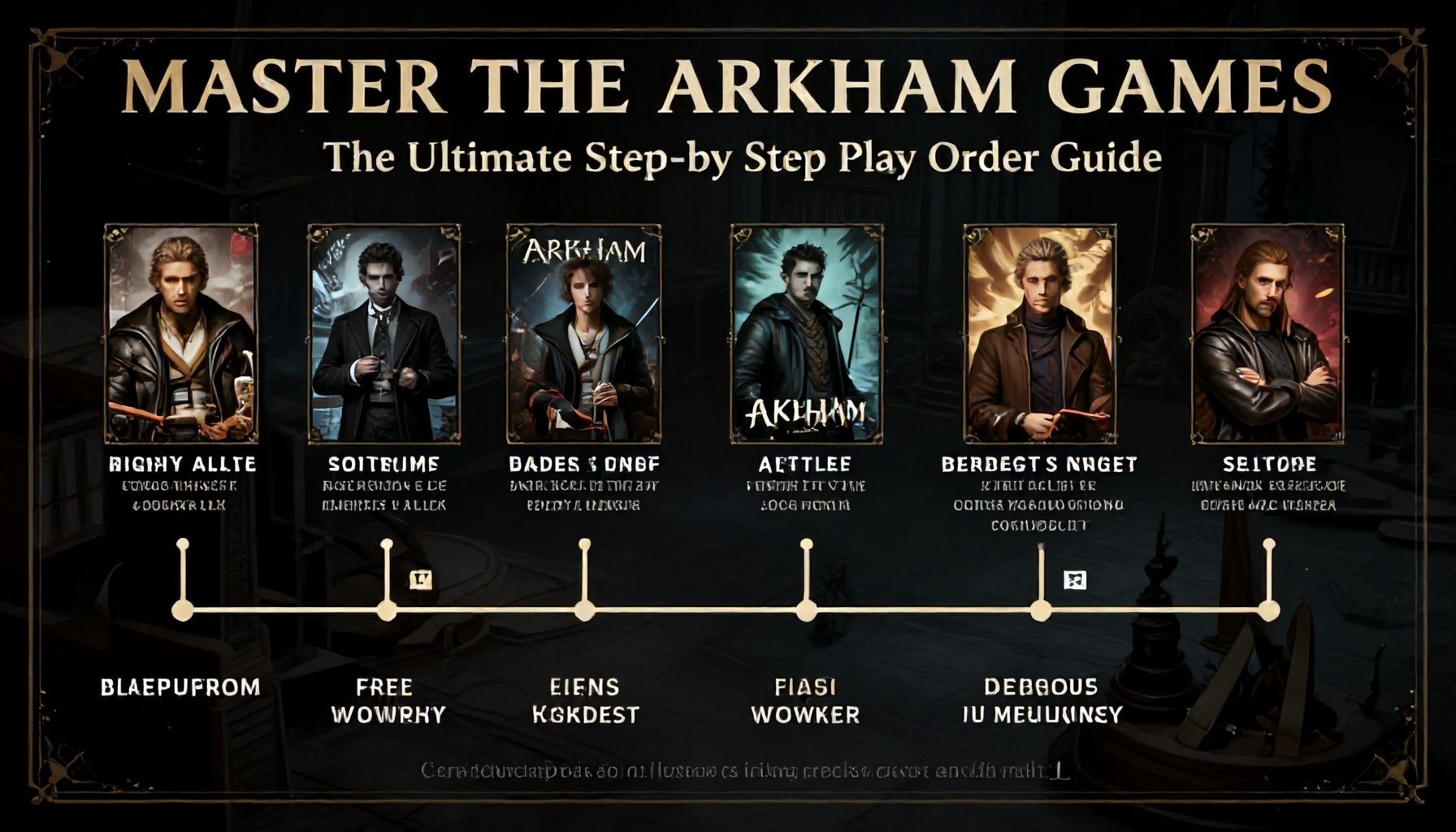
Look, I’ve played these games more times than I’ve had hot dinners. The Arkham series is a masterclass in superhero storytelling, but the order you play them in? That’s where things get messy. You’ve got three main entries, a spin-off, and a mobile game that somehow became a cult favorite. I’ve seen players stumble through the wrong order, missing key character arcs and gameplay evolution. Don’t be that player.
Here’s the deal: Arkham Asylum (2009) is where it all starts. It’s rough around the edges—no freeflow combat yet, and the controls feel clunky by today’s standards—but it’s got that raw, psychological horror vibe that set the tone. If you’re a completionist, Arkham Origins (2013) technically comes first chronologically, but it’s the weakest link. Save it for last or skip it entirely. My advice? Stick to the main trilogy.
| Game | Release Year | Play Order Priority |
|---|---|---|
| Batman: Arkham Asylum | 2009 | 1 |
| Batman: Arkham City | 2011 | 2 |
| Batman: Arkham Knight | 2015 | 3 |
| Batman: Arkham Origins | 2013 | Optional (Last or Skip) |
Now, Arkham City (2011) is where the series hits its stride. Freeflow combat, a massive open world, and the Joker’s voice acting? Legendary. This is the peak of the series. Then comes Arkham Knight (2015), which is divisive. The Batmobile’s a gimmick, but the story ties up the trilogy beautifully. If you’re playing for the lore, don’t skip it.
- Pro Tip: Play Arkham City first if you want the best combat experience. But if you’re a purist, stick to release order.
- Pro Tip:Arkham Origins’s Riddler challenges are actually fun. Play it last if you’re curious.
And what about Arkham VR? It’s a standalone experience, but if you’ve got a PSVR, it’s a must. Same with Legends of the Dark Knight on mobile—surprisingly solid for a spin-off.
Bottom line: Play the main trilogy in order. Skip the prequel unless you’re a completionist. And for God’s sake, don’t start with Arkham Knight. You’ll hate yourself.
Mastering the Arkham games is a journey through Gotham’s darkest corners, where every play order choice shapes your experience. Whether you prioritize narrative depth, gameplay evolution, or accessibility, this guide ensures you step into Batman’s boots at the perfect moment. For newcomers, Arkham Asylum remains the ideal starting point, while veterans might revisit the series with fresh eyes. The key to unlocking the full Arkham legacy? Embrace the detective work—uncover hidden Riddler trophies, experiment with combat combos, and savor the haunting atmosphere. As you close the final case, consider this: with Arkham Knight’s open-world evolution and rumors of future installments, what’s next for the Dark Knight’s digital adventures? The Bat-Signal is still shining.