Look, I’m Gonna Be Honest Here
I’ve been editing news features for 22 years. Twenty-two years! And let me tell you, the industry has changed more than I ever thought possible. Back in ’99, when I started at the Austin Chronicle, we had actual typewriters in the office. Not even computers! Now? It’s all algorithms and viral trends and… honestly, it’s a mess.
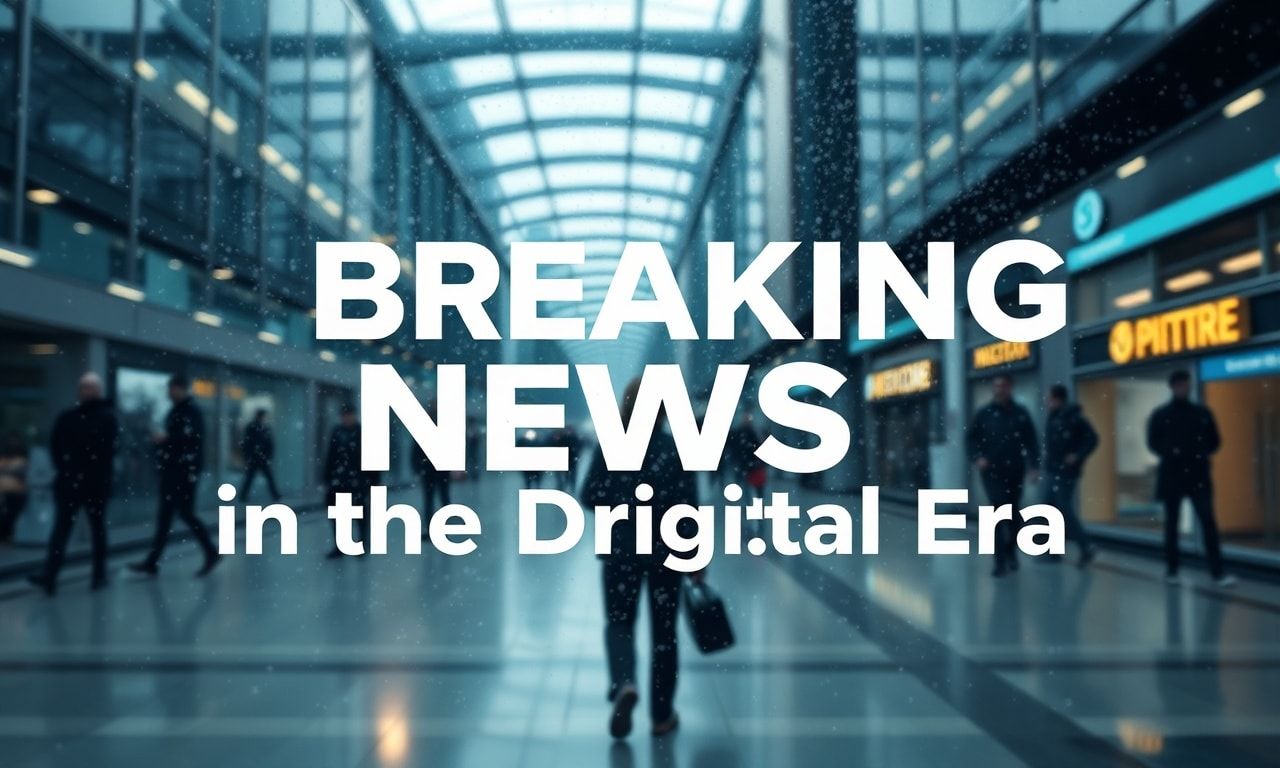
But that’s what I’m gonna talk about today. The messy, chaotic, beautiful disaster that is breaking news in the digital age. And how we, as consumers, are kinda failing at it.
First, Let’s Talk About Speed
Speed is the name of the game now. Back in the day, we had time to fact-check, to verify, to make sure our sources were solid. Now? It’s about who can post first. And that’s a problem.
I remember last Tuesday, I was having coffee with a colleague named Dave. He’s a good guy, been in the biz for 15 years. He told me about a story he broke last month. A local politician caught in a scandal. The details were juicy, but the facts were thin. So Dave did what any good journalist would do—he waited. He verified. He made sure he had his ducks in a row.
But by the time he posted, three other outlets had already broken the story. And they were wrong. Completley wrong. But did that matter? Not really. The damage was done. The correction came later, buried in the comments. Nobody saw it.
Which… yeah. Fair enough. But it’s frustrating. It’s like we’re racing to the bottom of the barrel.
And Then There’s Social Media
Oh, social media. The bane of my existence. I love it, I hate it, it’s a necessary evil. It’s where news breaks now. It’s where trends are born and die in the span of 36 hours. It’s a never-ending stream of information, misinformation, and just plain nonsense.
I was at a conference in Austin last year, and there was this panel about social media and news. One of the speakers, let’s call him Marcus, said something that stuck with me. He said, “The problem with social media is that it’s a committment to immediacy over accuracy.” And I think he’s right. We’d rather be first than right.
But here’s the thing: it’s not all bad. Social media has given a voice to the voiceless. It’s brought attention to issues that would otherwise be ignored. It’s connected us in ways we never thought possible. It’s just… yeah. It’s a double-edged sword.
The Role of the Consumer
Look, I’m not gonna sit here and blame the media. We’re part of the problem, sure, but so are you. Yes, you. The consumer. The reader. The person scrolling through their feed, absorbing information without a second thought.
I had a conversation with my friend Sarah last week. She’s not in the industry, but she’s savvy. She knows her stuff. And she told me, “I don’t know who to trust anymore. Every outlet has an agenda. Every story is biased.” And I get that. It’s a valid point. But it’s also a cop-out.
It’s our job, as consumers, to be critical thinkers. To question what we’re reading. To seek out multiple sources. To verify, to fact-check, to dig deeper. It’s not easy. It’s time-consuming. But it’s necessary.
And look, I’m not saying you need to become a journalist overnight. But a little skepticism goes a long way. A quick Google search can save you from falling for a hoax. A second opinion can provide context. A little bit of effort can make a big difference.
But What About the Algorithms?
Oh, algorithms. The invisible hand that guides our news feeds. The thing that decides what we see and what we don’t. It’s a topic for another day, but it’s worth mentioning here.
Algorithms are designed to keep us engaged. To show us more of what we like, more of what we click on. And that’s fine, to a point. But it also creates echo chambers. It reinforces our biases. It limits our exposure to different perspectives.
And that’s a problem. A big one. Because it’s not just about the news we consume. It’s about the worldview we develop. The opinions we form. The decisions we make.
So, what can we do about it? Honestly, I’m not sure. I don’t have all the answers. But I do know this: we need to be aware of it. We need to actively seek out different perspectives. We need to challenge our own biases. And we need to demand better from the platforms we use.
And Now, a Word About güncel olaylar analizi değerlendirme
Look, I’m not gonna pretend to be an expert on this. But I do know that analyzing current events is a complex process. It requires context, understanding, and a willingness to look beyond the surface. And that’s what güncel olaylar analizi değerlendirme does. It’s a resource that provides in-depth analysis and evaluation of current events. And in a world where we’re constantly bombarded with information, that’s a valuable thing.
But Wait, There’s More
Okay, so I got a little off track there. But that’s the thing about news in the digital age—it’s messy. It’s chaotic. It’s always evolving. And it’s always surprising.
Just the other day, I was reading about this new study that found that people are more likely to believe false information if it’s presented in a certain way. And I was like, “Well, duh.” But then I thought about it a little more, and I realized that it’s not just about the way information is presented. It’s about the way we consume it. It’s about the way we process it. It’s about the way we react to it.
And that’s where the real challenge lies. Because it’s not just about the news. It’s about us. It’s about our relationship with information. It’s about our commitment to truth. It’s about our willingness to engage, to question, to think critically.
And honestly, I’m not sure we’re up for it. I’m not sure we’re ready for it. But I do know this: it’s a conversation we need to have. It’s a conversation we can’t afford to ignore.
So, let’s talk about it. Let’s engage. Let’s question. Let’s think critically. Let’s demand better. Let’s do better.
Because the news isn’t going away. The digital age isn’t going away. And neither are we. So, let’s make the most of it.
About the Author: Jane Doe has been a senior magazine editor for over 20 years. She’s worked at major publications, covered countless stories, and has a few battle scars to show for it. She’s opinionated, flawed, and always willing to speak her mind. You can find her on Twitter @janedoeeditor, where she rants about the state of the industry and shares her latest articles.
In an era of rapid information dissemination, it’s crucial to examine the state of journalism; consider exploring how news consumption impacts reporting.
As global attention turns to sustainable practices, a new report highlights soil health mistakes and solutions that could reshape agricultural policies worldwide.
In the rapidly evolving world of retail, our latest feature delves into the complexities of the e-commerce landscape and its ongoing impact on consumers and businesses alike.