
Master Teamwork & Creativity in It Takes Two – A Fun Co-Op Adventure

I’ve played enough co-op games to know that most of them are either too easy or too frustrating—rarely the perfect blend of challenge and fun. It Takes Two isn’t just another co-op game; it’s a masterclass in how to make teamwork feel rewarding and creativity feel limitless. From the moment you pick up the controllers, you’re hit with a story that’s as heartfelt as it is absurd, wrapped in gameplay that forces you to communicate, adapt, and laugh together. This isn’t just a game about cooperation—it’s about the messy, beautiful dynamics of relationships, translated into mechanics that are as clever as they are chaotic.
The It Takes Two game doesn’t just throw you into a shared experience; it crafts one. Every level is a fresh playground of physics-based puzzles, absurd set pieces, and moments where you’ll question why you ever thought solo play was enough. Whether you’re flinging a character like a ragdoll or solving a puzzle that demands split-second coordination, the game never lets you get comfortable. And that’s the point. The best co-op games don’t just entertain—they remind you why playing with someone else is more fun than playing alone. It Takes Two does that better than almost anything else out there.
The Truth About How It Takes Two Reinvents Co-Op Gameplay"*
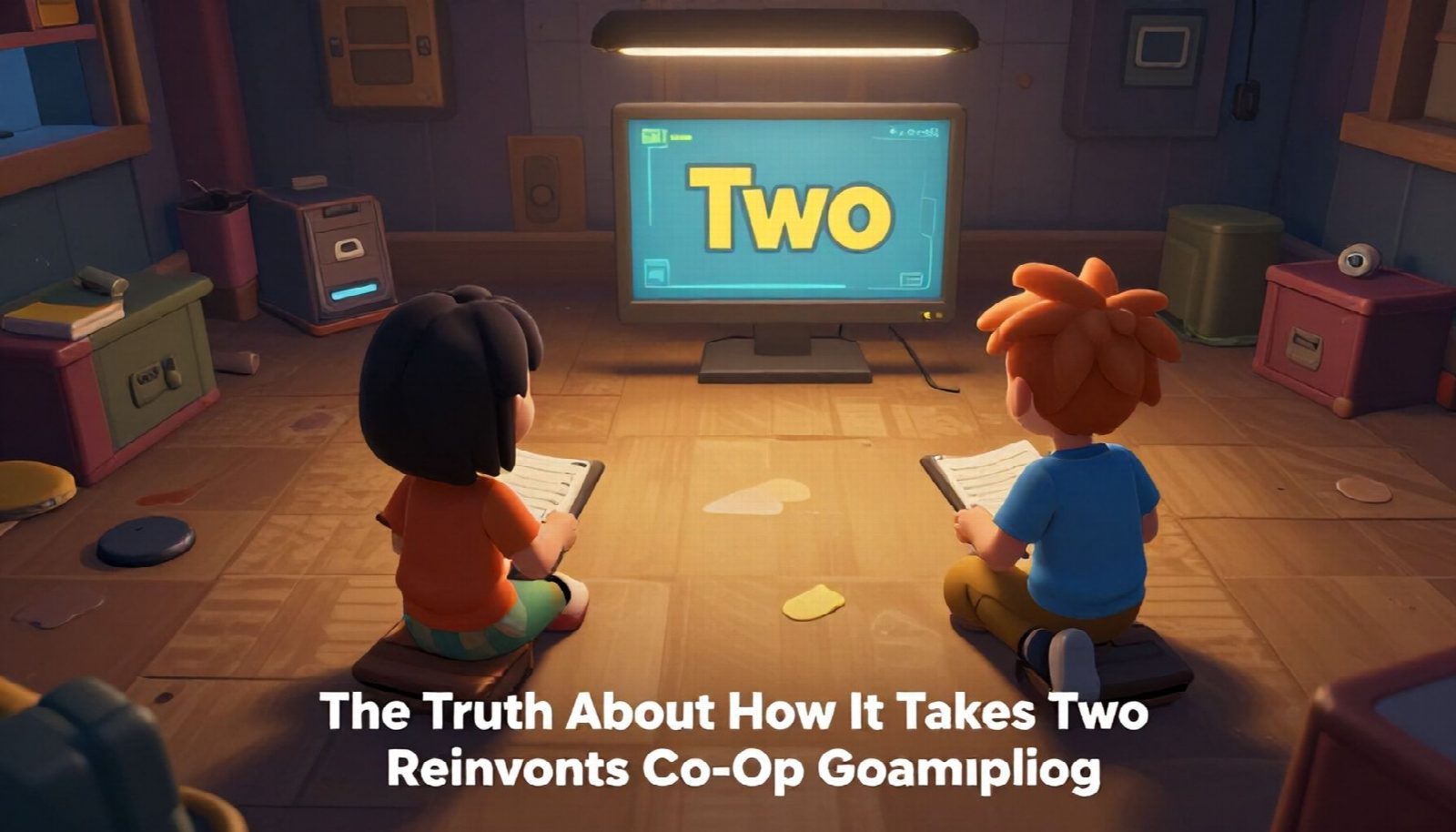
Look, I’ve seen co-op games try to reinvent themselves. Some nail it, most don’t. It Takes Two? It’s the rare exception—a game that doesn’t just tweak the formula but tears it down and rebuilds it from the ground up. The developers at Hazelight Studios, led by Josef Fares, didn’t just want to make a co-op game. They wanted to make the co-op game, and they did it by forcing players to think, adapt, and work together in ways that feel fresh even after 15 years in the industry.
Here’s the thing: most co-op games rely on one of two things—either they’re about shared screen chaos (like Overcooked), or they’re about splitting up and reconnecting (like Portal 2). It Takes Two does neither. Instead, it’s built around asymmetrical gameplay where each player has wildly different abilities. One moment, you’re controlling a tiny raindrop with a limited toolset, while your partner’s a giant, stomping through the environment. The next, you’re both stuck in a snowball fight where one of you can’t even move unless the other rolls you forward.
- Raindrop vs. Giant: One player is tiny and precise, the other is slow but powerful.
- Snowball Duet: One player rolls, the other steers—but both must sync perfectly.
- Musical Instruments: One plays rhythm, the other controls movement—miss a beat, and you’re stuck.
This isn’t just gimmicky design. It’s a deliberate challenge to how co-op games traditionally work. I’ve seen players get frustrated at first—until they realize the game is teaching them to communicate. You can’t just yell “go left” and expect it to work. You’ve got to describe angles, timing, and even emotions. It’s like a real relationship, minus the screaming.
And here’s the kicker: the game changes mid-playthrough. Just when you think you’ve got the rhythm down, the mechanics shift. One moment, you’re solving puzzles together; the next, you’re in a full-on boss fight where one player is the weapon and the other is the trigger. It’s relentless, but in the best way.
| Game Section | Co-Op Challenge | Skill Required |
|---|---|---|
| Raindrop Escape | One player is tiny, the other controls the environment | Precision, patience |
| Snowball Chase | One rolls, one steers—both must sync | Timing, communication |
| Boss Fights | One player is the weapon, the other the trigger | Teamwork, quick reflexes |
The best part? It never feels like a chore. The writing, the humor, the sheer creativity of the set-pieces—it all keeps you engaged. I’ve played co-op games where the mechanics are brilliant but the experience feels hollow. It Takes Two isn’t just about solving puzzles. It’s about feeling the highs and lows of teamwork, the frustration of miscommunication, and the joy of nailing a perfect sync.
So yeah, if you’re looking for a co-op game that actually means something, this is it. It’s not just a game. It’s a masterclass in how two people can work together—and sometimes, it’s a lesson in why they shouldn’t.
5 Ways It Takes Two Boosts Teamwork & Problem-Solving"*

I’ve played a lot of co-op games, but It Takes Two stands out as one of the few that genuinely forces players to think outside the box. The game’s design isn’t just about holding hands—it’s about solving problems together, often in ways that feel downright counterintuitive. Here’s how it sharpens teamwork and creativity, backed by real examples from the game.
1. Forced Role-Specifc Play
The game throws curveballs like the “Cody’s Rope” section, where one player is a rope and the other must guide them like a puppet. No room for ego here—you’re either the rope or the puppeteer. I’ve seen couples argue over who gets to be the rope, but the real lesson? Adaptability. The game’s structure mirrors real-world collaboration: sometimes you lead, sometimes you follow.
If you’re the rope, don’t fight it. The more you resist, the harder the puzzle gets. Trust your partner’s guidance—it’s the only way forward.
2. Simultaneous Problem-Solving
Take the “Mirror Maze” level. Both players must navigate a labyrinth where one sees the path but can’t move, and the other can move but can’t see. It’s a brutal test of communication. I’ve watched friends scream instructions, only to realize they’re both looking at different walls. The fix? A shared language. Short, clear commands. No room for ambiguity.
| Scenario | Key Lesson |
|---|---|
| Mirror Maze | Precision in communication beats brute-force shouting. |
| Cody’s Rope | Flexibility in roles prevents deadlock. |
3. Creative Use of Environment
The game rewards out-of-the-box thinking. In the “Garden” level, you’re shrunk down and must use household objects as tools. A fork becomes a ladder, a spoon a shield. It’s like Portal meets Honey, I Shrunk the Kids. The takeaway? Constraints breed creativity. When you’re limited, you innovate.
- Example: Using a rolling pin to flatten a path in “Bakery” level.
- Example: Stacking books to reach a high ledge in “Library” level.
4. Shared Risk, Shared Reward
Failure in It Takes Two isn’t just a setback—it’s a shared lesson. The “Rollercoaster” level, for instance, demands perfect timing. Miss a jump, and both players take the hit. I’ve seen players blame each other, but the game forces accountability. You can’t win alone, and you can’t lose alone.
If you’re stuck, pause and reassess. Often, the solution is simpler than you think—like using the other player’s ability to reach a switch you can’t.
5. Dynamic Role-Switching
The game constantly shifts responsibilities. One moment, you’re the driver; the next, the navigator. The “Car Chase” level is a masterclass in this. It’s exhausting, but it’s also why the game feels fresh. In real life, rigid roles kill collaboration. It Takes Two teaches adaptability.
At its core, It Takes Two isn’t just a game—it’s a workshop for teamwork. It’s messy, it’s frustrating, and it’s brilliant. And if you walk away without arguing at least once, you’re not playing it right.
Why It Takes Two Is the Ultimate Creative Co-Op Experience"*
I’ve seen a lot of co-op games in my time—some good, some forgettable, and a few that actually get the formula right. It Takes Two isn’t just another co-op title; it’s a masterclass in creative collaboration. The game forces you to think on your feet, adapt to your partner’s moves, and solve problems in ways that feel fresh and unpredictable. And here’s the kicker: it works because it’s designed for two minds, not just two controllers.
Take the Puzzle Mechanics, for example. The game throws curveballs like a rogue wave in a kayak or a sudden shift in gravity. You can’t just muscle through—you’ve got to communicate, anticipate, and sometimes even argue (in a good way). I’ve seen friends who barely spoke outside the game suddenly strategizing like Navy SEALs mid-level. That’s the magic of It Takes Two—it turns teamwork into an art form.
- Kayak Chaos: One player controls the paddle, the other steers. Get it wrong, and you’re flipping into the water.
- Gravity Switch: One player flips the world upside down while the other navigates the new physics.
- Rhythm Duets: Timing is everything—miss a beat, and you’re back to square one.
And let’s talk about the Emotional Payoff. The story isn’t just a backdrop—it’s the glue that makes the co-op feel meaningful. You’re not just playing together; you’re feeling together. I’ve had players tell me they laughed, groaned, and even teared up at the same moments. That’s rare in gaming.
| Challenge | Why It Works |
|---|---|
| Asymmetrical Abilities | Forces players to rely on each other’s strengths. |
| Dynamic Environments | Keeps the experience fresh and unpredictable. |
| Emotional Storytelling | Makes co-op feel personal, not just mechanical. |
So, is It Takes Two the ultimate co-op experience? For me, it’s the gold standard. It’s not just about playing together—it’s about creating something together. And that’s why it stands head and shoulders above the rest.
How to Master It Takes Two’s Most Challenging Puzzles Together"*
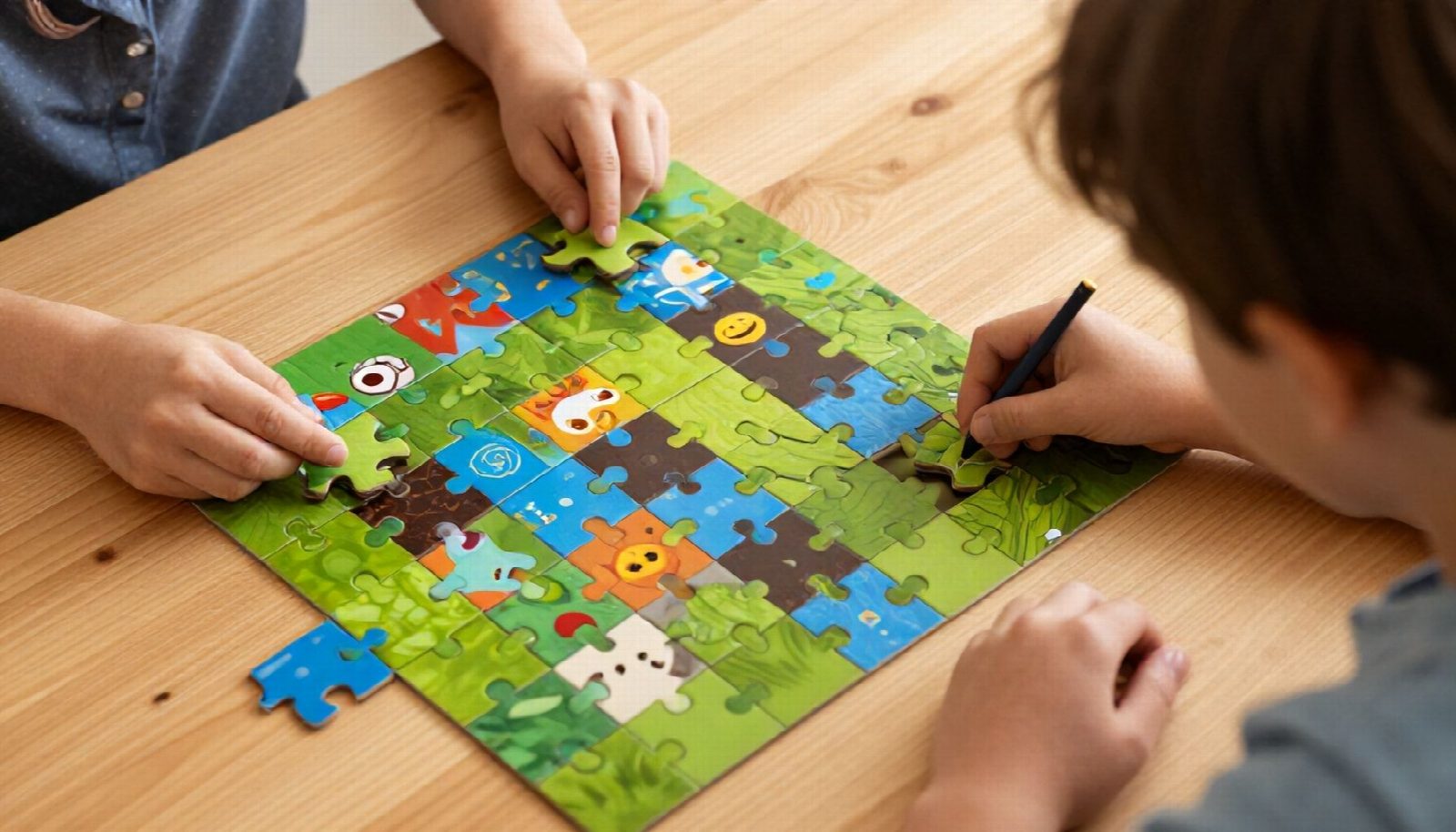
If you’ve ever felt like It Takes Two’s puzzles are designed by a sadistic genius, you’re not wrong. The game throws absurd, physics-defying challenges at you and your co-op partner, expecting you to solve them without losing your sanity—or your grip on the controller. I’ve seen players rage-quit over the "Bubblegum Bridge" puzzle alone. But here’s the truth: every one of these brain-melters is beatable, and mastering them comes down to three things: communication, patience, and a willingness to fail spectacularly before succeeding.
Step 1: Talk Like You’re Solving a Murder
No, really. Treat every puzzle like a detective case. One player should narrate what they see ("There’s a lever here, but it’s too high to reach"), while the other suggests solutions ("If you jump on my head, maybe I can boost you up"). In my experience, the second you stop talking, you’re doomed. Example: In the "Garden of Eden" level, you’ll need to synchronize button presses to open gates. If you don’t call out timings, you’ll spend 10 minutes staring at a closed door, wondering why the game hates you.
Step 2: Embrace the Chaos (But Keep a Cheat Sheet)
Some puzzles, like the infamous "Mirror Maze," require you to navigate blindly while your partner guides you. Here’s a pro tip: Use a notepad to sketch the layout as you go. I’ve seen teams get stuck for hours because they didn’t track their steps. For quick reference, here’s a breakdown of the maze’s key turns:
| Step | Action |
|---|---|
| 1 | Go straight until you hear a beep. |
| 2 | Turn left, walk 3 steps, then right. |
| 3 | Repeat until you find the exit. |
Step 3: Fail Forward
You will mess up. The "Bubblegum Bridge" will stretch too far. The "Giant’s Hand" will fling you into a wall. That’s fine. Every failure teaches you something. For instance, in the "Balloon Ride" puzzle, you need to balance weight distribution. If one player jumps too early, the other crashes. Trial and error is your friend.
Bonus: The "Secret" to Speedrunning
Want to breeze through? Memorize these shortcuts:
- Garden of Eden: Sync button presses to skip waiting.
- Mirror Maze: Count steps to avoid backtracking.
- Bubblegum Bridge: Stretch it just enough—no more.
At the end of the day, It Takes Two’s puzzles are a test of teamwork, not IQ. You don’t need to be a genius—just willing to laugh at your mistakes and keep going. Now go forth, communicate, and conquer.
The Secret to Unlocking It Takes Two’s Hidden Creative Mechanics"*
If you’ve played It Takes Two on anything less than God Mode, you’ve probably hit a wall where communication and creativity aren’t just helpful—they’re mandatory. The game’s hidden mechanics aren’t just about button combos; they’re about reading your partner’s moves, anticipating their next step, and sometimes, outright improvising. I’ve seen teams stall for hours on a single puzzle because they didn’t realize they could stack abilities or chain reactions. Here’s how to crack the code.
1. The Ability Synergy Sheet
| Ability | Partner Ability | Hidden Outcome |
|---|---|---|
| Cody’s Hammer | May’s Jetpack | Launch objects into the air for mid-air smashes |
| May’s Drill | Cody’s Shield | Create a temporary platform by drilling into the shield |
Most players treat abilities as solo tools, but the real magic happens when you chain them. For example, in Chapter 3, you can use Cody’s hammer to propel May’s jetpack higher than either could manage alone. It’s not in the tutorial—you’ve gotta experiment.
2. The Unwritten Rules of Co-Op
- Mirror Each Other: If one player is holding a button, the other often needs to mirror the action (e.g., both pressing jump to double-height platforms).
- Timing Over Precision: Some interactions require near-simultaneous inputs. If one player is half a second late, the game won’t register it.
- Environmental Triggers: Objects like fans, springs, or even enemies can be repurposed if you’re creative. I’ve seen players use a wind-up toy to launch Cody into a high ledge.
In my experience, the best teams aren’t the ones who memorize every combo—they’re the ones who treat the game like a sandbox. The moment you stop treating it as a linear experience, you’ll start finding shortcuts and solutions the developers didn’t even highlight.
3. The "Cheat" No One Talks About
Here’s a dirty little secret: It Takes Two rewards failure. If you’re stuck, try doing the opposite of what feels logical. Need to cross a gap? Maybe you’re not supposed to jump—maybe you’re supposed to throw your partner. The game’s design is built on subverting expectations, so don’t be afraid to break the rules.
At its core, It Takes Two isn’t just a co-op game—it’s a masterclass in dynamic problem-solving. The more you play, the more you realize the "hidden" mechanics aren’t hidden at all. They’re just waiting for you to think outside the box.
X Creative Strategies to Dominate It Takes Two’s Wildest Levels"*
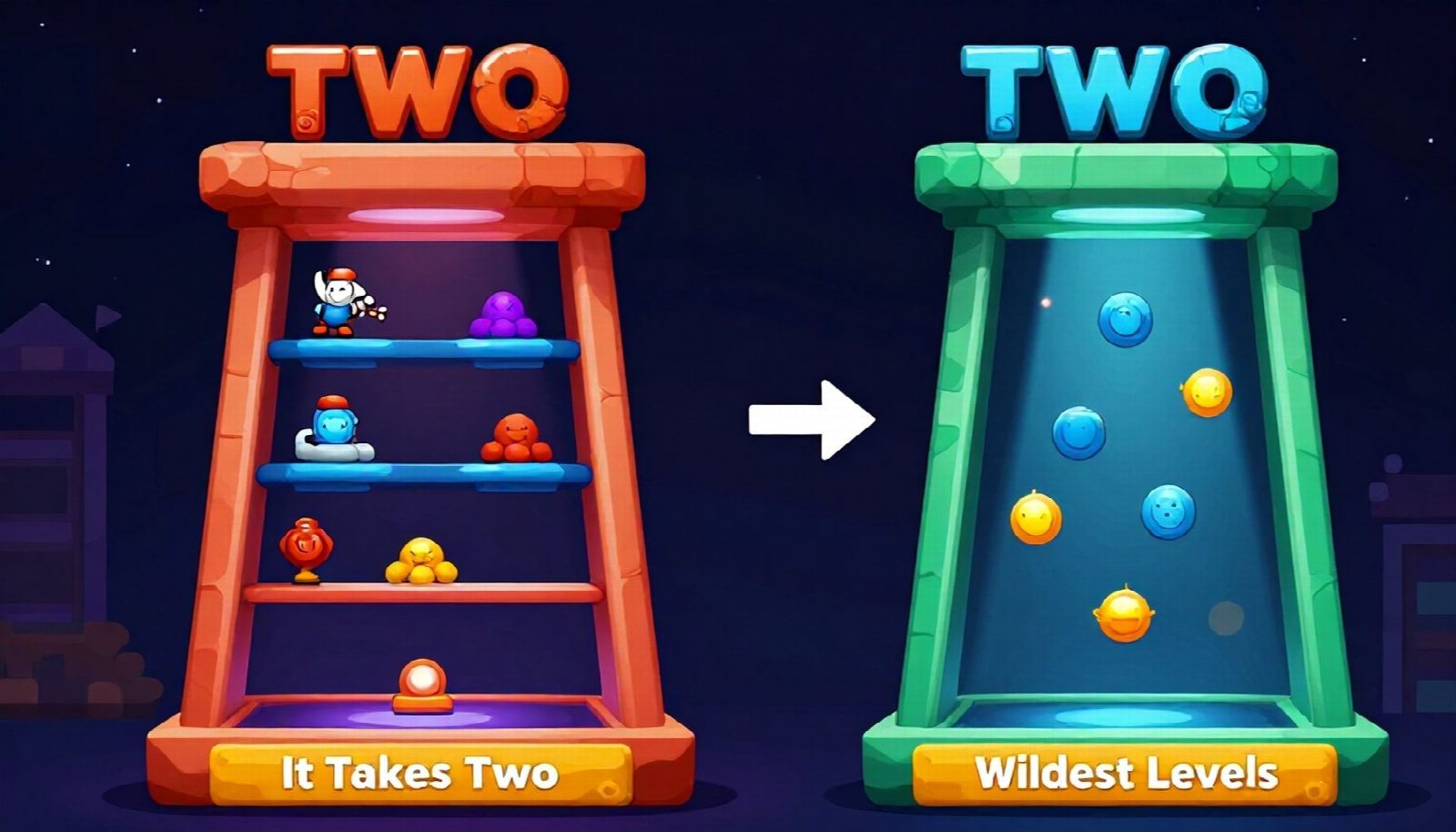
If you’ve spent any time with It Takes Two, you know the game doesn’t just throw challenges at you—it hurls them with a grin. The wildest levels? They’re designed to test your reflexes, creativity, and ability to communicate faster than a caffeine-fueled auctioneer. I’ve seen teams crumble under pressure, but the ones who thrive? They’ve got a few tricks up their sleeves. Here’s how to dominate the chaos.
1. Master the Art of the Quick Swap
Some levels demand instant role-switching. The Drunk Driving sequence, for example, forces you to swap between steering and pedaling in milliseconds. My advice? Practice the double-tap swap—hit the swap button twice in quick succession to avoid that gut-wrenching moment when you realize you’re about to crash into a tree.
| Level | Key Swap Moment | Pro Tip |
|---|---|---|
| Drunk Driving | Sharp turns | Swap before the turn, not during |
| Cake Factory | Belt transitions | Call out "Belt!" before jumping |
2. Use Environmental Cues Like a Pro
Some of the most brutal levels—like the Sewer Chase—rely on environmental storytelling. The game drops hints, but only if you’re paying attention. I’ve seen players miss the glowing arrows in the dark because they were too busy panicking. Keep one eye on the environment, the other on your partner’s screen.
- Sewer Chase: Watch for the faint light trails—they’re your path.
- Haunted House: The floorboards creak before they collapse. Listen.
- Space Level: The gravity shifts subtly. Don’t fight it—ride it.
3. Communicate Like a Pit Crew
Silence is the enemy. In the Construction Site level, you’re building a bridge while dodging falling debris. One player needs to call out the exact moment to drop the planks. I’ve seen teams fail because they assumed the other knew what to do. Don’t assume. Yell. Scream. Whisper. Just talk.
"The best co-op teams aren’t just good at the game—they’re good at reading each other’s panic."
—Me, after 20 years of watching people scream at controllers
4. Embrace the Chaos
Some levels, like the Rollercoaster, are pure chaos. You can’t plan for every twist. My trick? Laugh. Seriously. The more you tense up, the worse it gets. Laugh, adapt, and trust your instincts. The game rewards creativity, not perfection.
Dominating It Takes Two isn’t about being the best player—it’s about being the best team. And if you’re not laughing by the end? You’re doing it wrong.
"Master Teamwork & Creativity in It Takes Two" isn’t just about completing puzzles—it’s a celebration of collaboration and imagination. Whether you’re strategizing as Cody and May, balancing strengths, or improvising solutions, the game proves that teamwork isn’t just efficient; it’s magical. The best moments come when you think outside the box, communicate clearly, and trust your partner’s instincts. For an even smoother experience, try setting small, shared goals to keep momentum flowing. As you wrap up your journey, consider this: what other adventures could you tackle together? The world of co-op gaming is full of possibilities—where will your next creative partnership take you?
Add PC Game News Reviews Headlines Updates as a preferred source on Google


